

7 Steps to Choose the Right Cycling Jersey
Last Updated: October 26, 2026
Quick Summary
To choose the right cycling jersey, measure your chest and waist and match those numbers to the brand's own size chart, not your t-shirt size. Then match the cut to your bars and the fabric to your weather, and check that the pockets and features earn their place.
- Measure chest, waist, torso length and arm length before you shop, then compare to the product page size chart.
- Polyester blends suit hot, dry rides while merino blends suit cool, damp conditions and multi-day wear.
- Road jerseys are cut close for drop bars; MTB jerseys are looser and longer for flat bars.
- Three rear pockets are standard, and a fourth zippered pocket is worth paying for.
- Try the jersey on in riding posture so the front hem doesn't gap when you lean forward.
Table of Contents
- Start With How You Ride, Not the Label
- Cycling Jersey Size Guide: Measure, Then Match the Cut
- Best Fabric for Cycling Jerseys: Match the Material to the Weather
- Road Cycling Jersey vs Mountain Bike Jersey: Which Cut Fits Your Bars
- Cycling Jersey Features and Pockets That Earn Their Place
- Common Mistakes That Send Jerseys Back
- Add the Right Jersey to Your Cart at BoyerCycling
- Frequently Asked Questions
Start With How You Ride, Not the Label
Most riders buy a cycling jersey by grabbing their usual clothing size and picking a color they like. That's backwards. The right jersey starts with how you actually ride: the hours in the saddle, the weather you ride in, and whether your bars are drop or flat.
At BoyerCycling, we see the same pattern in returns and exchanges. Riders who match the jersey to their riding style keep it. Riders who shop by label alone send it back.
Here's the good news. Choosing well comes down to seven decisions, and none of them require a wind tunnel. Below, we'll walk through each one, from measuring yourself properly to spotting the features that actually matter on the road.
A cycling jersey is a close-fitting upper-body garment built for riding posture, with rear pockets and moisture-managing fabric. It differs from a t-shirt in cut, storage, and ventilation.
Before you look at a single product page, answer three questions:
- How many hours per week do you ride?
- What's your typical weather: hot and dry, cool and damp, or a mix?
- Are you on drop bars, flat bars, or a mix of both?
Those answers narrow the field fast. A rider logging two-hour weekend spins in summer needs something very different from someone commuting year-round in wet conditions.
How to choose a cycling jersey you'll actually love riding in
Cycling Jersey Size Guide: Measure, Then Match the Cut
The cycling jersey size guide rule is simple: measure your chest and waist, then match those numbers to the brand's own size chart, not to your t-shirt size. Jerseys run close to the body, so a "large" in one brand can fit like a "medium" in another.
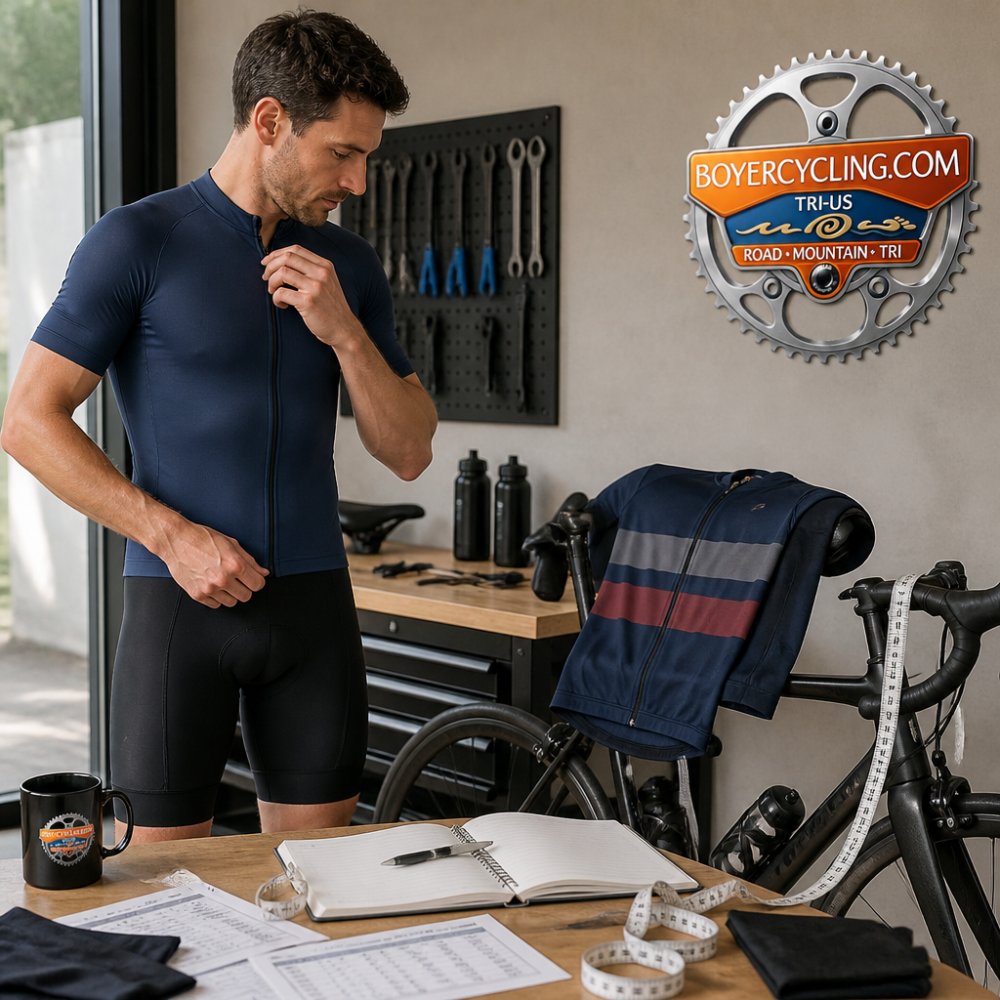
Here's how to measure at home:
- Chest: wrap the tape under your arms, across the fullest part, keep it level.
- Waist: measure at the narrowest point, relaxed, don't suck in.
- Torso length: from shoulder seam to hip bone, standing straight.
- Arm length: shoulder seam to wrist, arm slightly bent.
Write those numbers down before you shop. Then compare them to the size chart on the product page, not the one in your head.
Cut matters as much as size. A race cut sits tight and short. A club cut leaves room through the chest and waist. A relaxed cut feels closer to a t-shirt. If you're between sizes, go up for club and relaxed cuts, and stay put for race cuts. Beyond the silhouette, the durability of the stitching and fabric density help you identify quality apparel that maintains its shape through countless miles.
Watch out: buying your t-shirt size without measuring is the single biggest cause of jersey returns. Measure once, save the numbers in your phone, and you'll never guess again.
Best Fabric for Cycling Jerseys: Match the Material to the Weather
The best fabric for cycling jerseys depends on your climate, not on marketing claims. Polyester blends suit hot, dry rides. Merino blends suit cool, damp conditions and multi-day wear. The fabric decides how the jersey feels after hour three.
Three common options:
- Polyester and synthetic blends: light, fast-drying, cheap to replace. Best for summer and high-effort rides.
- Merino wool blends: breathable, odor-resistant, comfortable across a wider temperature range. Costs more.
- Mixed knits: combine both, usually for shoulder-season riding.
If you ride in heat and sweat heavily, synthetic wins on drying speed. If you ride in cool, changeable weather or do multi-day trips, merino earns its price. A summer-weight merino blend, like the M. Lightweight Merino Jersey in Grey Heather, pairs natural breathability with polyester durability for riders who want one jersey to cover more conditions.
Fit and ventilation matter as much as fiber. A loose jersey flaps and traps heat. A close fit with a full-length zipper lets you dump heat on climbs and close up on descents.
Best cycling jerseys buying guide
Here's how the three common jersey fabrics compare on weather, cost, and best use.
| Fabric | Best for | Key difference |
|---|---|---|
| Polyester and synthetic blends | Summer and high-effort rides | Light, fast-drying, cheap to replace |
| Merino wool blends | Cool, damp conditions and multi-day wear | Breathable, odor-resistant, costs more |
| Mixed knits | Shoulder-season riding | Combine both materials |
Road Cycling Jersey vs Mountain Bike Jersey: Which Cut Fits Your Bars
The road cycling jersey vs mountain bike jersey question comes down to posture. Road jerseys are cut for a forward lean: short in front, longer in back, tight through the torso. MTB jerseys are cut looser and longer for upright flat-bar riding.
Get this wrong and you'll feel it. A road jersey on flat bars bunches at the shoulders. An MTB jersey on drop bars rides up and flaps at speed.
Men’s Core Grey Jersey – Breathable, Performance Fit with Four-Pocket Storage →
Here's the short version:
- Road cut: close fit, rear pockets, short front hem, longer tail. Built for drop bars.
- MTB cut: relaxed fit, longer body, often no rear pockets. Built for flat bars and technical terrain.
- Gravel and endurance: usually a road cut with a slightly roomier torso.
If you ride drop bars and want a race-ready fit, a jersey like the W. Peloton Race Jersey reflects the road-cycling cut described here. If you want a trimmer alternative for mixed riding, the W. Jet Escape Jersey offers an athletic fit at a lower price point.


Try the jersey on in riding posture, not standing straight. Lean forward and check the front hem doesn't gap.
Cycling Jersey Features and Pockets That Earn Their Place
Pockets are where jerseys earn their keep. Three rear pockets are the standard. A fourth zippered pocket for keys or a phone is worth paying for. Anything beyond that is usually decoration.
Features that matter:
- Full-length zipper: lets you control airflow. Worth it on any jersey you'll ride in variable weather.
- Rear pockets: three is standard, four is better for long rides.
- Elastic grippers at hem and cuffs: stop the jersey riding up.
- Reflective accents: useful for low-light riding.
- Flatlock seams: reduce chafing on long days.
Features that rarely matter: fancy prints, "aerodynamic" claims on a club-cut jersey, and pockets so small they hold one gel.
If four-pocket storage is high on your list, the Men's Core Grey Jersey is built around exactly that: four rear pockets, a full-length zipper, and elastic grippers at the hem and cuffs to keep it in place.

Check pocket depth before you buy. A pocket that can't hold a phone and two gels without sagging isn't a pocket, it's a suggestion.
Common Mistakes That Send Jerseys Back
Most jersey returns trace back to a handful of avoidable mistakes. Fix these before you order and you'll skip the return label entirely.
The big ones:
- Buying your t-shirt size. Jerseys are cut close. Measure, then match the chart.
- Ignoring the cut. Race, club, and relaxed fits behave very differently on the bike.
- Choosing fabric for looks, not weather. A heavy jersey in summer is misery.
- Skipping the riding-posture test. A jersey that fits standing up can gap when you lean forward.
- Overlooking pocket depth. Shallow pockets lose your phone on the first bump.
- Buying for the label, not the ride. A race cut for a casual weekend rider usually ends up unworn.
A common mistake is ordering two sizes "to try both" and keeping neither. Measure once, pick the cut that matches your bars, and order one.
If you're unsure about compatibility with your setup, ask before you buy. A quick question beats a return.
Add the Right Jersey to Your Cart at BoyerCycling
You've got the framework. Now the fun part. If you want to explore top performance cycling clothing brands before adding a jersey to your cart, start there.
At BoyerCycling, we stock jerseys for road, mountain, and triathlon riders, with expert guidance to match the gear to your setup. Our exclusive pricing means you're not paying a premium for the same performance.
Three things to do before you check out:
- Pull up your measurements and compare them to the size chart.
- Confirm the cut matches your bars: drop or flat.
- Check the fabric against your typical weather.
Get started with BoyerCycling and ride in a jersey that fits the way you ride.
Frequently Asked Questions
How should a cycling jersey fit?
A cycling jersey should sit close to the body without restricting movement. On the bike, the sleeves should end cleanly at the upper arm, the hem should stay put when you reach for the bars, and the fabric across the chest should lie flat rather than bunch. A performance cut feels snug standing up because it is built for a riding posture. If the shoulder seams pull or the zipper waves, size up.
What material is best for a cycling jersey?
Polyester blends suit most riders: they move moisture, dry fast and cost less. For hot, long days, a lightweight merino and polyester blend such as a 50/50 mix adds breathability and odor resistance. Heavier jerseys with brushed inner faces hold warmth for cold starts. Avoid cotton, which soaks up sweat and stays wet. Match the fabric weight to your typical conditions rather than buying one jersey for every season.
What is the difference between a road cycling jersey and a mountain bike jersey?
Road jerseys use a close, aerodynamic cut, a full-length zipper, three or four rear pockets and a dropped hem for the forward position. Mountain bike jerseys are cut looser, often with shorter sleeves or longer sleeves for trail cover, and may favor a zip pocket or a relaxed fit that works with a hydration pack. Choose by your bars and posture: road jerseys for drop bars, looser cuts for flat bars and technical trails.
How many pockets should a cycling jersey have?
Three rear pockets cover most rides: food, a phone and a light layer. Four pockets, like the Men's Core Grey Jersey, add a zippered or split section for keys and cards so small items do not migrate. If you ride with a hydration pack or frame bag, two pockets may be enough. More pockets add capacity but also bulk, so pick the count that matches what you actually carry on your longest regular ride.
Choosing the right cycling jersey shouldn't feel like a gamble. BoyerCycling takes the guesswork out with expert-backed selection across road, mountain, and triathlon gear, plus exclusive pricing that keeps performance within reach. Measure once, match your cut to your bars, and let our team help you find the jersey that fits. Add the right jersey to your cart and ride with confidence.
