

Best Budget Mountain Bike Drivetrain Parts: 2026 Guide
Table of Contents
- Best Budget Mountain Bike Drivetrain Parts at a Glance
- Best Budget MTB Groupsets: Complete vs Piece-by-Piece
- Cheap 1x Mountain Bike Drivetrain: What You Actually Need
- Mountain Bike Drivetrain Compatibility: The Five Checks Before You Buy
- Mountain Bike Chain Replacement: When and What to Buy
- Budget Drivetrain Parts Compared: Prices, Pros and Cons
- Installation, Adjustment and Long-Term Durability
- Frequently Asked Questions
Last Updated: October 21, 2026
Best Budget Mountain Bike Drivetrain Parts at a Glance
The best budget mountain bike drivetrain parts fit your existing frame, freehub and shifter standards without adapters, because mismatched standards cost more to fix than the parts themselves. Below, we break down what works together, which parts deliver the most value per dollar, and how to avoid the compatibility traps that turn a budget build into an expensive one.
Most riders assume the cheapest groupset wins. The truth is duller: the cheapest drivetrain is the one you install once and adjust twice a year. A budget mountain bike drivetrain built around 11- or 12-speed 1x components typically delivers the best balance of cost, gear range and replacement-part availability. Every recommendation here is judged on three things: does it fit, does it last, and can you buy spares for it in two years.
Best Budget MTB Groupsets: Complete vs Piece-by-Piece
Buying a complete budget MTB groupset saves time but rarely saves money, and it often forces you into parts you don't need. Piece-by-piece buying wins on value when your crankset, bottom bracket or shifter is still serviceable, because you skip paying twice for working components.
A complete groupset bundles the shifter, derailleur, cassette, chain and crankset in one box. It is the right call for a frame-up build where you own nothing usable, and the wrong call when your crank arms are sound, because the crankset is usually the most expensive item in the box.
The piece-by-piece route suits most riders. Replace the wear items first: chain, cassette and chainring. Add a shifter and rear derailleur only when shifting has genuinely degraded, so you spend the budget where it changes how the bike rides.
| Approach | Best For | Trade-off |
|---|---|---|
| Complete groupset | Frame-up builds, full rebuilds | Pay for parts you may already own |
| Piece-by-piece | Upgrading a working bike | Requires compatibility homework |
| Wear items only | Tight budgets, older bikes | Shifting stays dated |
Cheap 1x Mountain Bike Drivetrain: What You Actually Need
A cheap 1x mountain bike drivetrain needs five things: a narrow-wide chainring, a clutch rear derailleur, a wide-range cassette, a matched chain and a shifter with the correct pull ratio. Everything else is optional. The single-chainring setup is popular on budget builds because it removes the front derailleur, one shifter and a chainring, cutting cost and maintenance.
The chainring is where budget builds fail first. A narrow-wide profile keeps the chain seated without a front derailleur, and a direct-mount design keeps the chainline accurate. We stock the FSA Gradient direct mount chainring in 30, 32, 34 and 36 tooth versions, built for Shimano 12-speed cranks and FSA Gradient cranksets.

For riders starting from a 2x or 3x setup, the Suntour 1x ZERON 30T aluminum crankset includes a bottom bracket and a 30T direct-mount ring, removing the guesswork around bottom bracket fit.
Mountain Bike Drivetrain Compatibility: The Five Checks Before You Buy
Mountain bike drivetrain compatibility comes down to five checks: freehub type, cassette speed count, chain width, shifter pull ratio and chainline. Get all five right and the parts bolt on and shift; get one wrong and you are returning parts. Run them in order before you add anything to a cart.
Here is the checklist we would run before ordering anything:
- Freehub type. Most budget cassettes use the HG freehub. Some wide-range 12-speed cassettes need a different driver body. Confirm yours before buying. A common trap is a 12-speed cassette that physically fits an HG driver but sits too far inboard, throwing off chainline and shifting.
- Speed count. A 12-speed shifter needs a 12-speed cassette and a 12-speed chain. Mixing counts causes missed shifts and chain wear. The shifter, cassette and chain must share the same speed count; the crankset and derailleur are more forgiving.
- Chain width. An 11-speed chain will not run cleanly on a 12-speed cassette. Match the chain to the cassette, not the crankset; a mismatch shows up as noisy running and premature wear.
- Pull ratio. SRAM Eagle shifters and derailleurs only work together. A SRAM SX Eagle shifter will not index correctly against a Shimano derailleur. Pull ratio is the cable the shifter pulls per click; mixing brands usually moves the derailleur the wrong distance per shift.
- Chainline and offset. Direct-mount chainrings come in different offsets, and the wrong one pushes the chainline out and stresses the drivetrain. Chainline is the distance from the frame centerline to the chainring teeth; a few millimeters of error causes dropped chains and uneven wear.
That last point catches more people than any other. The e*thirteen Helix Race chainring uses a flip-flop design that switches the chainline between 52mm and 56mm, useful on custom or mixed-brand setups where a fixed offset would sit wrong.

A sixth check that is easy to overlook: derailleur hanger alignment. A bent hanger makes even a perfectly matched drivetrain shift poorly, and budget builds often start with a used frame. Check the hanger with an alignment tool or have a shop confirm it before blaming the parts.
Mountain Bike Chain Replacement: When and What to Buy
Mountain bike chain replacement should happen when a chain checker shows stretch beyond the wear limit, or roughly every few hundred miles of hard trail riding, whichever comes first. A worn chain wears the cassette and chainring with it, so delaying costs far more than the chain itself.
The KMC X11 11-speed chain is a sound budget pick for 11-speed builds. It includes a Missing Link for tool-free fitting, uses chamfered inner and outer plates for cleaner shifts, and is listed as compatible with all major brands.
Match the chain to the cassette speed every time. An 11-speed chain on an 11-speed cassette, a 12-speed chain on a 12-speed cassette. Chain width is not a place to save money.
Two habits extend chain life more than any product choice. Keep the chain clean and lightly lubed, and check stretch regularly rather than waiting for shifting to feel bad. Shifting that feels bad usually means the cassette is already damaged.
FSA Gradient Mountain Bike Direct Mount Chainring 34 Tooth for SH 12 Speed →
Budget Drivetrain Parts Compared: Prices, Pros and Cons
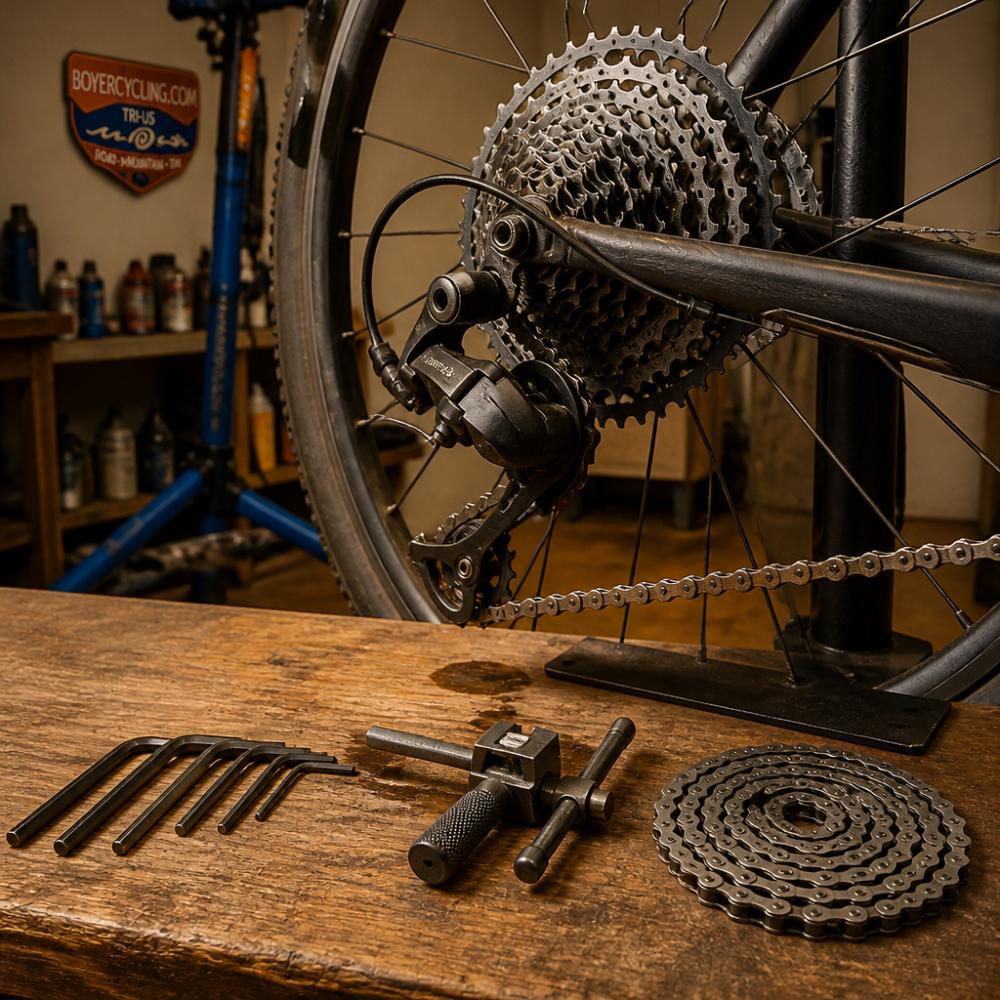
The table below compares the budget drivetrain parts we stock, with current prices and honest trade-offs. Every price here is our listed price, and every spec comes from the product listing.
| Part | Price | Key Spec | Best For | Watch Out For |
|---|---|---|---|---|
| Suntour 1x ZERON 30T crankset | $79.99 | 30T ring, BB included, 10/11-speed | First 1x conversion | Not a 12-speed part |
| SRAM SX Eagle crankset 170mm | $69.99 | 32T steel X-SYNC 2, BB included | 11/12-speed 1x builds | 170mm arms only |
| FSA Comet HD Megaexo crankset | $110.00 | 32T direct mount, 24mm spindle | XC and trail riders | Chainring sold separately above 32T |
| SRAM SX Eagle 12-speed shifter | $34.99 | ZERO LOSS, X-ACTUATION | SRAM Eagle drivetrains | Not MatchMaker compatible |
| KMC X11 11-speed chain | $33.99 | 118 links, Missing Link | 11-speed builds | 11-speed only |
| FSA Gradient chainring 30-36T | $108.98 | Direct mount, Shimano 12-speed | FSA Gradient cranks | Fits FSA Gradient cranks only |
| e*thirteen Helix Race 30T ring | $59.95 | Flip-flop 52/56mm chainline | Mixed-brand setups | 30T only |
The Suntour ZERON is the value leader for a first conversion, but it is a 10/11-speed crank, so it does not belong on a 12-speed build. The SRAM SX Eagle crankset costs less and covers 11- and 12-speed, making it the sharper buy for most riders.

On the shifting side, the SRAM SX Eagle shifter is a straightforward budget upgrade, but only inside a SRAM Eagle drivetrain. Buy it alongside a matching SRAM derailleur or not at all.
Installation, Adjustment and Long-Term Durability
Installation and adjustment decide whether budget parts last. A correctly set up budget drivetrain outlasts a badly set up premium one, because most premature wear comes from poor alignment, not poor materials.
Work in this order. Fit the crankset and set the chainline. Install the cassette and check it sits square on the freehub.
Chain sizing deserves its own note.
Indexing is where most home mechanics rush. Shift to a middle cog, then turn the barrel adjuster a quarter turn at a time until the chain runs centered.
Troubleshooting poor shifting follows a short decision tree. If shifts are slow in one direction, adjust cable tension. If the chain overshoots the largest or smallest cog, adjust the limit screws.
Long-term durability comes down to three wear items: chain, cassette and chainring. Budget steel cassette and chainring teeth last well when the chain is replaced on time.
Replacement costs stay manageable if you buy standard parts.
Frequently Asked Questions
What is the best budget mountain bike drivetrain?
A budget mountain bike drivetrain usually means a 1x setup built around a wide-range cassette, a clutch rear derailleur and a single chainring. On a tight budget, start with a crankset and chainring, add a matching chain, then upgrade the shifter and derailleur together. Mixing brands is where most budget builds go wrong, so match the shifter, derailleur and cassette to the same system and check freehub compatibility before ordering.
Are budget 1x drivetrains good for mountain biking?
Yes, for most trail and cross-country riding. A cheap 1x mountain bike drivetrain removes the front derailleur, drops weight and simplifies shifting. The trade-off is gear range: a single chainring with a wide cassette covers most climbs, but steep, sustained climbs may feel harder than a 2x setup. Choose your chainring size carefully, since a 30T or 32T ring changes the climbing feel more than any other part.
Can I mix mountain bike drivetrain brands?
Sometimes, but only where the parts are designed to work together. Shifters and derailleurs must share the same cable-pull system, and chains must match the cassette speed. Cranksets and chainrings are more flexible: the FSA Comet HD crankset fits Shimano and SRAM 11-12 speed systems, and the e*thirteen Helix Race chainring uses a flip-flop design to adjust chainline between 52mm and 56mm. Check each listing before you buy.
When should I replace my mountain bike chain?
Replace the chain when a chain checker shows stretch, or roughly every 1,500 to 3,000 km depending on conditions. A worn chain wears the cassette and chainring faster, so replacing it early is the cheapest maintenance you can do. The KMC X11 11-speed chain includes a Missing Link for tool-free fitting, and matching the chain to your cassette speed is essential for smooth shifting.
Is it cheaper to replace individual drivetrain parts or the whole groupset?
Individual parts are usually cheaper if only one component is worn. Replace the chain first, then the cassette, then the chainring as wear appears. A full groupset makes sense when several parts are worn at once or when you are converting to 1x. Add up the individual prices against a complete set, and factor in labour if a shop does the install.
Budget drivetrain upgrades get expensive fast when a part doesn't fit, and that is the problem worth solving first. BoyerCycling stocks the cranksets, chainrings, shifters and chains covered here, with expert guidance to confirm compatibility against your freehub, bottom bracket and shifter standard before you order. Our team will check fit for your specific setup, and our exclusive pricing keeps the total build cost down. Browse the drivetrain range and add to cart with confidence.