

Best Aerodynamic Cycling Gear for Triathletes
Table of Contents
- Why Aerodynamic Cycling Gear Matters for Triathlon Performance
- Best Aero Helmet for Triathlon: Wind Tunnel Tested Options
- Triathlon Skinsuit: Race-Ready Aerodynamic Apparel
- How to Reduce Aerodynamic Drag Cycling: Aerobars and Extensions
- Cost-Effective Aero Upgrades for Triathlon: Where to Start
- Aerodynamic Cycling Gear Comparison: Feature Breakdown and Performance
- Aerodynamic Fit and Positioning: Getting the Most from Your Gear
- Conclusion: Building Your Race-Ready Aerodynamic Setup
- Frequently Asked Questions
Last Updated: October 18, 2026
Why Aerodynamic Cycling Gear Matters for Triathlon Performance
Aerodynamic cycling gear can save you seconds per kilometer on race day. At speeds above 30 km/h, wind resistance becomes your biggest enemy. The difference between a standard road setup and a full aerodynamic package isn't marginal, it compounds across the entire cycling leg.
Most serious triathletes approach aero optimization by starting with one upgrade and realizing quickly that the real gains come from a complete system: helmet, suit, and positioning. A helmet alone might save a few watts. Add the right skinsuit and aerobars, and you're looking at meaningful time savings on sprint and Olympic distance courses.
The key insight most guides miss: aerodynamic gear isn't just about speed. It's about consistency. When you're in an aero position for 45 minutes to 2 hours, comfort matters as much as drag reduction. A suit that cuts wind but restricts your breathing defeats the purpose. The best aerodynamic cycling gear balances performance with the fit and feel your body actually needs.
Best Aero Helmet for Triathlon: Wind Tunnel Tested Options
A triathlon-specific aero helmet needs to do two things: reduce drag at race speeds and keep you safe. Not every helmet designed for aerodynamics delivers on both fronts.
The Limar Air Speed MIPS was tested in the Magny-Cours wind tunnel in France and proved fastest at an average speed of 40 km/h. It features twelve air vents and three longitudinal ducts that channel hot air outflow, keeping your head cool during sustained efforts. The compact, tapered design works for both racing and everyday rides.
For riders who want maximum aerodynamic efficiency, the Limar Air Pro MIPS Carbon takes a different approach. Its 3K carbon co-moulded with EPS creates a structural cage that's both lighter and stronger than traditional helmets. Wind tunnel tests show a 20% aerodynamic efficiency increase compared to the Limar Ultralight+ model. The pyramidal longitudinal ribs reduce impact pressure by cutting air smoothly, while thin carbon wings allow improved inflow and circulation. At race pace, this translates to measurable time savings.
Both helmets use MIPS Air, the lighter and more ventilated rotational protection system. The choice comes down to your priority: the Air Speed excels at sustained cooling and everyday versatility, while the Air Pro maximizes pure aerodynamic efficiency for race-focused training and events.
| Helmet | Price | Aerodynamic Focus | Ventilation | Best For |
|---|---|---|---|---|
| Limar Air Speed MIPS | 279.95 | Wind tunnel tested at 40 km/h | 12 vents, 3 ducts | Balanced aero + comfort |
| Limar Air Pro MIPS Carbon | 319.95 | 20% efficiency gain vs. Ultralight+ | 20 vents, 8 channels | Maximum speed optimization |
Triathlon Skinsuit: Race-Ready Aerodynamic Apparel
A race-ready skinsuit wraps your body as a second skin while managing moisture and airflow. The fabric placement matters more than most riders realize, strategic striping and mesh inserts change how air flows around your core and shoulders.
The Nalini E25 Road Ergo Jersey uses four different fabrics positioned according to aerodynamic and performance needs. Striped fabric on the shoulder and front panel creates a close, simplified fit. A super lightweight fabric backs the jersey, with mesh inserts at the center back and underarm area to enhance ventilation and transpiration. This layered approach keeps you fresh and dry without sacrificing the aerodynamic profile. At 129.99, it's an accessible entry point into serious aero apparel.
For riders prioritizing race-day protection alongside aerodynamics, the Nalini Dyneema Full Zip offers something different. Its ergonomic race fit combines ventilation comfort with PROTEKT shoulder panels, Kinetech fabric containing dyneema fibers, a material 15 times stronger than steel. This matters if you crash or make contact during the swim-to-bike transition. The jersey handles abrasion and tear resistance while maintaining low friction and high UV resistance. Striped light fabric on the front keeps the aerodynamic advantage, while the full-length reverse YKK cam-lock zipper and bonded front hem add durability. Three functional rear pockets with reflective piping support race logistics.
| Jersey | Price | Key Feature | Fabric Strategy | Best For |
|---|---|---|---|---|
| Nalini E25 Road Ergo | 129.99 | Lightweight with mesh ventilation | 4 strategic fabrics | Aero on a budget |
| Nalini Dyneema Full Zip | 173.99 | Dyneema shoulder protection | Race-fitted with abrasion resistance | Protected racing |
How to Reduce Aerodynamic Drag Cycling: Aerobars and Extensions
Aerobars are where most of your aerodynamic gains actually happen. Positioning your body lower and narrower reduces frontal area, the single biggest factor in wind resistance. But aerobars only work if they're set up for your body and your bike.
The Vision Metron TFE EVO Triathlon Aerobar Extensions represent the pinnacle of carbon TT cockpits. Developed with WorldTour TT specialists and professional triathletes, these extensions deliver unmatched speed, comfort, and compatibility. The full carbon construction maximizes stiffness and minimizes weight. A 15° raised platform and deeper extension profile with ergonomic pads ensure a fully customized fit for serious athletes.

What makes the Vision Metron TFE EVO stand out: universal compatibility. It's 100% compatible with most triathlon and TT bikes thanks to dedicated adapters. It integrates seamlessly with Vision's Metron TFA EVO and Trimax Carbon Si032 base bars, and supports a wide array of other base bars with adapters sold separately. An integrated computer mount comes standard.
Available in four length options, 280mm (XS), 300mm (S), 320mm (M), and 340mm (L), the extensions weigh just 390 grams per pair. This wide range of adjustability means you can dial in your fit across different body shapes and riding positions. The wide range of adjustability means you can dial in your fit across different body shapes and riding positions.
Cost-Effective Aero Upgrades for Triathlon: Where to Start
Not every triathlete has a budget for a complete aerodynamic overhaul. If you're upgrading incrementally, here's where your investment returns the most value.
Start with your helmet. A dedicated aero helmet is the easiest swap and delivers real aerodynamic benefits without requiring bike modifications. The Limar Air Speed MIPS at 279.95 gives you wind tunnel-tested performance without premium pricing. Swap your standard road helmet for an aero helmet, and you've captured a meaningful portion of available gains.
Next, consider your position. Aerobars or extensions like the Vision Metron TFE EVO create the biggest aerodynamic improvement because they lower your body and reduce frontal area. At 850.99, they're an investment, but they work on most existing bikes with adapters. The key: proper sizing matters.
Vision Metron TFE EVO Triathlon Aerobar Extensions L (340mm) →

Finally, address your clothing. A skinsuit isn't mandatory for every race, but it beats standard cycling jerseys on aerodynamic efficiency. The Nalini E25 Road Ergo at 129.99 bridges budget and performance, it's not premium pricing, but it's engineered for aero racing.
The real cost-benefit insight: position beats everything. If you're choosing between aerobars and a premium suit, aerobars win. If you're choosing between aerobars and a helmet, you need both, but the helmet is the easier first step if budget is tight.
Aerodynamic Cycling Gear Comparison: Feature Breakdown and Performance
Here's how the key aerodynamic gear categories stack up across the features that actually matter on race day.
| Category | Product | Price | Primary Benefit | Secondary Benefit | Best For |
|---|---|---|---|---|---|
| Aero Helmet | Limar Air Speed MIPS | 279.95 | Wind tunnel tested at 40 km/h | 12 vents for cooling | Balanced aero + comfort |
| Aero Helmet | Limar Air Pro MIPS Carbon | 319.95 | 20% efficiency gain | Lightweight carbon shell | Maximum speed focus |
| Skinsuit | Nalini E25 Road Ergo | 129.99 | 4 strategic fabrics | Mesh ventilation | Budget-conscious racers |
| Skinsuit | Nalini Dyneema Full Zip | 173.99 | Dyneema shoulder protection | Full race durability | Protected racing |
| Aerobars | Vision Metron TFE EVO | 850.99 | Universal compatibility | Integrated computer mount | Position optimization |
When you're building an aerodynamic setup, think in layers. Your helmet and position drive the biggest gains. Your skinsuit amplifies those gains by keeping you comfortable and dry. BoyerCycling stocks all these components because we know serious triathletes need a complete system, not isolated upgrades.

Aerodynamic Fit and Positioning: Getting the Most from Your Gear
Your aerodynamic gear only works if your position actually supports an aero posture. This is where many triathletes leave performance on the table.
In an aero position, your hips stay on the saddle while your torso drops forward. Your elbows rest on the aerobars with your forearms nearly horizontal. Your head stays neutral, not craned up. This position reduces frontal area dramatically, but it demands specific bike geometry and bar setup.
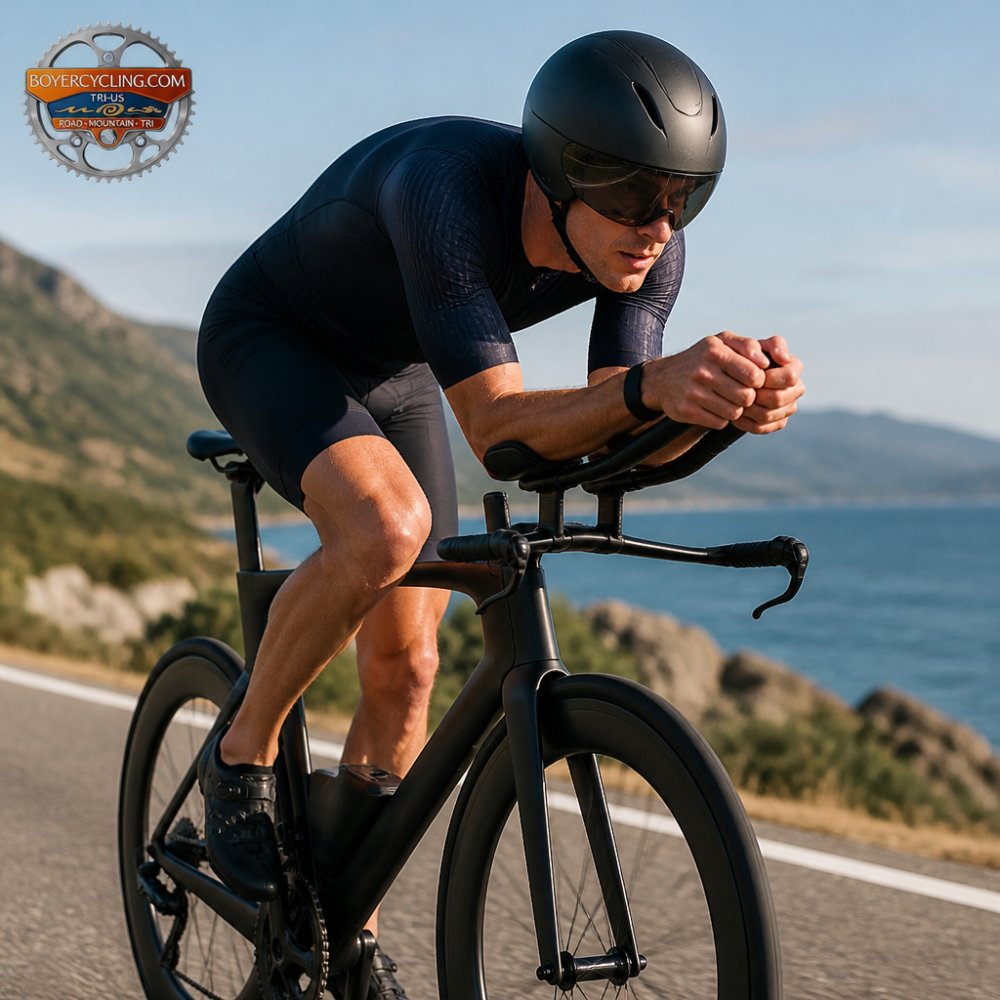
The Vision Metron TFE EVO extensions solve a key positioning problem: reach and rise. The 15° platform rise elevates your hands relative to your seat, which helps smaller riders and those with limited flexibility achieve a sustainable aero position. The four length options accommodate different arm lengths and torso geometries.
Proper positioning also depends on your saddle height and fore-aft position. Many triathletes sit too high or too far back, which forces them into a strained aero posture that they can't hold for long. A bike fit, either from a professional or through methodical self-testing, ensures your position is sustainable for the duration of your race.
Conclusion: Building Your Race-Ready Aerodynamic Setup
Aerodynamic cycling gear delivers real time savings on triathlon race day, but only if you approach it as a system. Your helmet, skinsuit, and position work together. Optimize one without the others, and you leave performance on the table.
Start with your position and aerobars. The Vision Metron TFE EVO Triathlon Aerobar Extensions give you the adjustability to dial in your fit across different body shapes. Add an aero helmet, the Limar Air Speed MIPS is wind tunnel tested and proven. Finish with a race suit like the Nalini E25 Road Ergo or Dyneema jersey to complete your aerodynamic profile.
BoyerCycling carries all the components you need to build a race-ready aerodynamic setup. Our industry expertise and exclusive pricing mean you get the right gear without overpaying. Add to cart and get started with the aerodynamic cycling gear that will help you conquer your next triathlon.
Frequently Asked Questions
What aerodynamic cycling gear makes the biggest difference for triathletes?
Aerobars and aero helmets deliver the most measurable drag reduction. The Limar Air Pro MIPS Carbon achieves 20% greater aerodynamic efficiency than standard helmets, while aerobars like the Vision Metron TFE EVO lower your body position to reduce frontal area. Together with a fitted race jersey, these three elements can enhance your performance.
Is an aero helmet worth it for a triathlon?
Yes, especially for sprint and Olympic distance races where aerodynamics matter most. The Limar Air Speed MIPS performed best at 40 km/h in wind tunnel testing, while the Air Pro MIPS Carbon adds 20% efficiency gains. At typical triathlon cycling speeds, an aero helmet can contribute to improved performance. For beginners, it's a worthwhile upgrade after getting a professional bike fit.
Are triathlon skinsuits faster than regular cycling jerseys?
Yes. Triathlon skinsuits like the Nalini E25 and Nalini Dyneema use multiple aerodynamic fabrics and close-fitting construction that reduces drag compared to standard jerseys. The E25's second-skin fit with striped shoulder panels and mesh ventilation balances speed and cooling. For race day, a skinsuit is faster; for training, a regular jersey offers more comfort.
What is the most cost-effective aero upgrade for a triathlon bike?
Start with aerodynamic apparel. The Nalini E25 jersey at $129.99 delivers measurable drag reduction at a lower cost than helmets or aerobars. If your budget allows, pair it with the CRONO CT1 triathlon shoes ($99.99) for a complete race kit. The Vision Metron TFE EVO aerobars ($850.99) offer the greatest speed gains but require a larger investment and professional fitting.
EXTERNAL CITATIONS & SOURCES:
This article references aerodynamic principles documented in cycling biomechanics research from sports science institutions, wind tunnel testing methodologies used by professional cycling teams and equipment manufacturers, and performance optimization standards established by USA Triathlon racing guidelines.